While America Sleeps: The Hidden Workforce Keeping Your Tech Problems From Waiting Until Morning
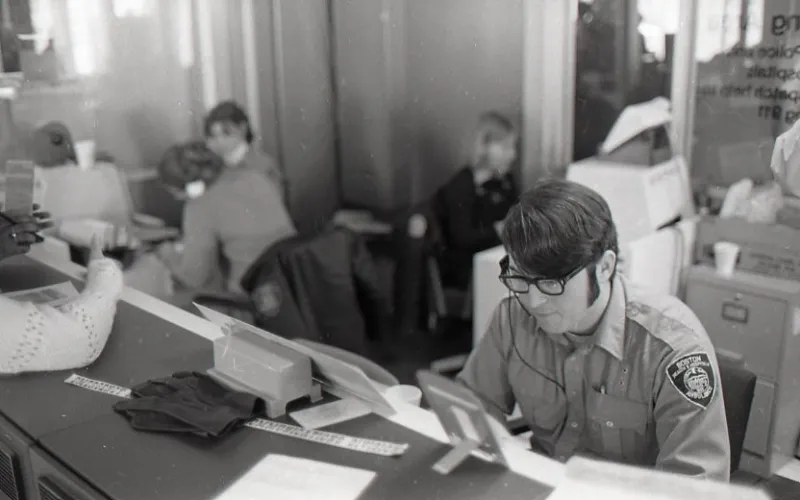
Photo: City of Boston Archives from West Roxbury, United States, CC BY-SA 2.0, via Wikimedia Commons
When a small business owner in Ohio discovers her payment terminal won't process transactions at 2:47 a.m., someone answers. It is rarely someone in Ohio. It is rarely even someone on the same continent.
The overnight support economy that underwrites American technology consumption is one of the industry's least examined labor systems — a rolling wave of agents who follow darkness westward across time zones, keeping response times intact while the bulk of the workforce sleeps. For a publication built on covering technology around the clock, this shift deserves a closer look.
Who Actually Answers at 3 A.M.
The staffing model for after-hours support generally falls into three tiers. The first is domestic onshore teams, typically staffed by contractors working night differentials that add 10 to 15 percent to base pay. The second is nearshore operations in Latin America, whose time zones align neatly with US evenings and early mornings — a geography advantage that has driven explosive growth in support hubs in Colombia, Costa Rica, and Mexico. The third is offshore centers in the Philippines and India, where the overnight shift in Manila corresponds to prime US business hours in reverse.
The Philippines remains the anchor of this system. Support work there carries cultural prestige, English fluency is widespread, and the night shift — locally called the "graveyard" — often pays a premium that agents describe as essential to making the work tolerable. Many handle US accounts exclusively, adopting American names and studying regional slang so a customer in Dallas never wonders why the voice on the line sounds slightly formal.
The Machinery Behind the Midnight Call
Overnight support is not simply daytime support with worse lighting. The tooling changes fundamentally because staffing is thin. Where a daytime tier might have dozens of agents handling chat, phone, and email queues, a 3 a.m. shift might have four people covering everything.
That scarcity forces automation to the front. AI-assisted triage tools now categorize inbound tickets, surface relevant knowledge base articles, and in some cases draft responses before an agent reads the message. Deflection bots — the chatbots customers love to resent — exist largely to protect the humans behind them from drowning in password resets at hours when no supervisor is awake.
Escalation chains also flatten overnight. During business hours, a complex issue might travel through tier one, tier two, a specialist team, and an engineering escalation. At 3 a.m., there may be no specialist team at all. Agents on the night shift routinely handle issues well above their daytime pay grade, guided by runbooks and, when things go badly wrong, a phone tree of on-call engineers who can be roused from sleep.
Where the Experience Breaks Down
American customers frequently report that overnight support feels different — slower, more scripted, less empowered. The reasons are structural, not personal.
Night agents typically have narrower authority. Refunds above a certain threshold, account reinstatements, and billing disputes often require supervisor sign-off that simply is not available until morning. A customer calling at 2 a.m. about a fraudulent charge may receive empathy and a ticket number, but the actual resolution waits for a 9 a.m. shift change.
Knowledge gaps compound the problem. The deep experts — the database administrators, the integration engineers, the people who understand why the sync failed — are asleep. Night agents work from documentation, and documentation is always incomplete.
The result is a two-tier customer experience that most companies quietly acknowledge and few publicly address. Some premium support contracts now explicitly promise daytime-equivalent coverage overnight, staffing senior engineers around the clock. The price of those contracts reflects how unusual that is.
The Human Cost of the Hours Nobody Wants
Circadian disruption is not a soft concern. Research on shift work has linked long-term night schedules to elevated risks of cardiovascular disease, metabolic disorders, and depression. Support work adds its own stressors: emotional labor with frustrated callers, metrics that track handle time down to the second, and the isolation of working while everyone you know is asleep.
Burnout in overnight support teams runs measurably higher than in dayshift equivalents, according to attrition patterns reported by major outsourcers. Turnover on night shifts can run double the daytime rate, which creates its own quality problem — the agents customers reach at 3 a.m. are disproportionately new.
Some companies are experimenting with remedies: rotation schedules that limit consecutive nights, wellness stipends, and career pathways that treat night shifts as a fast track to senior roles rather than a dead end. The firms that get this right tend to keep their best overnight agents longer, and customers notice.
Why It Matters for the Industry
As AI handles more first-line interactions, the overnight support workforce is shifting toward the complex, the escalated, and the emotionally charged. The agents who remain will need deeper technical fluency than their predecessors — and the industry has been slow to adjust pay and training to match that reality.
For tech professionals, the takeaway is straightforward: the reliability of any product that promises 24/7 support rests on a labor system most engineering teams never see. Understanding it is not sentimentality. It is due diligence.