The Wrench Turns: How Repair Rights Went From Fringe Cause to Statehouse Victory
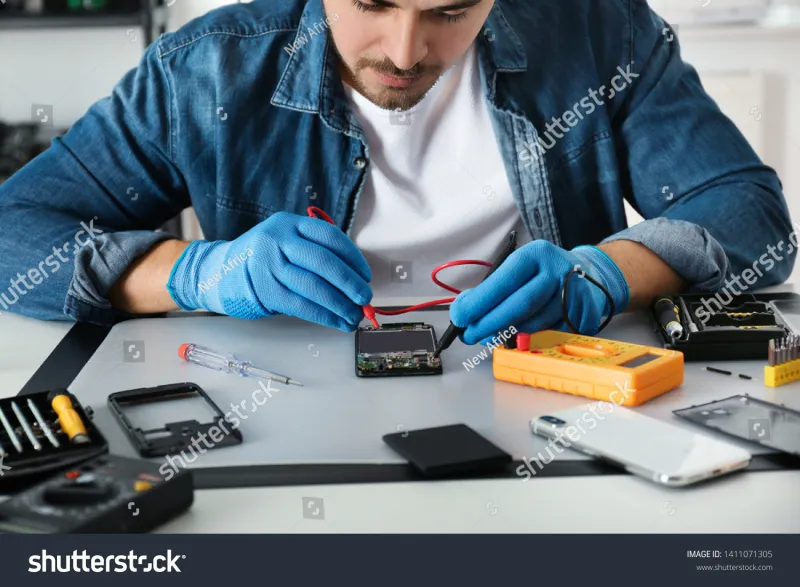
Photo: independent repair technician fixing smartphone workbench tools, via www.shutterstock.com
For more than a decade, the right-to-repair movement was treated as a niche crusade — a loose affiliation of independent shop owners, tinkerers, and agricultural engineers filing petitions that rarely went anywhere. That era is over. From Minnesota to Colorado to California, state legislatures have begun passing repair statutes with real enforcement teeth, and the manufacturers who once dismissed the movement are now negotiating terms they would have rejected outright five years ago.
The shift did not happen by accident. It was built, piece by piece, by an unusual coalition that made repair a kitchen-table issue rather than a policy abstraction.
The Coalition That Changed the Conversation
The movement's early framing — gadgets, screws, and glue — never moved lawmakers. What moved them was the tractor. When farmers in the Midwest discovered that a software lock could idle a $400,000 combine during harvest season while the only authorized technician was three states away, repair stopped being a consumer electronics debate and became a matter of agricultural economics. Colorado's 2023 agricultural repair law, the first of its kind, was a direct product of that frustration.
Hospitals followed. Medical device service restrictions during the pandemic, when third-party technicians were barred from servicing ventilators at some facilities, gave the movement its most sympathetic examples. State legislators who had never touched a soldering iron suddenly understood what proprietary diagnostics meant when a piece of equipment failed at 2 a.m.
By the time California passed its broad electronics repair law in late 2023 — followed by Minnesota's even more expansive statute — the question was no longer whether repair legislation would spread, but how fast.
What the Laws Actually Require
The statutes passed so far share a common architecture. Manufacturers selling covered electronics within a state must make parts, tools, and documentation available to independent repair providers and owners on "fair and reasonable" terms, and they may not use software locks or pairing mechanisms to disable functioning parts installed by anyone other than an authorized technician.
The scope matters. Early laws cover smartphones, tablets, and laptops; newer proposals extend to appliances, wheelchairs, and agricultural equipment. Exemptions — often for embedded medical devices, gaming consoles, and certain security hardware — remain a point of contention, and manufacturers have lobbied aggressively to carve out their most profitable categories.
Critically, several laws include anti-discrimination provisions that prevent the classic workaround: selling parts to independents at inflated prices or delaying documentation releases until the product lifecycle has effectively ended.
The Economics Behind the Resistance
Manufacturers' objections have never been primarily about safety, whatever their public statements suggest. They are about margin. Proprietary repair channels are among the most profitable segments of the hardware business — Apple's services division, which includes repair revenue, consistently posts margins that hardware alone cannot match. John Deere's dealer network, which supplies diagnostics and parts exclusively, functions as a recurring revenue annuity built on top of equipment sales.
Independent repair advocates have never disputed that manufacturers deserve compensation for parts and documentation. Their argument is narrower: once a consumer owns a device, the manufacturer's control over its maintenance should end. The counterargument — that unauthorized repair creates safety and data-security risks — has some legitimacy in specific categories, but it has been stretched well past credibility when applied to a screen replacement on a six-year-old phone.
What a Repairable Future Looks Like
The practical effects are already visible. Parts availability for recent-generation devices has improved in states with active statutes, and manufacturers that once sued repair aggregators now publish teardown guides. The European Union's regulatory pressure — mandatory battery replaceability, standardized charging ports, repairability scoring — has effectively globalized standards that no manufacturer can ignore for the US market alone.
The next frontier is software. Pairing requirements, which tie components to a device's serial number and render salvaged parts useless, remain the industry's most durable lock. Several state bills now target pairing explicitly, and the outcome of those fights will determine whether the repair movement's gains are durable or cosmetic.
For consumers, the stakes are straightforward: devices that last longer, repair bills that reflect the actual cost of parts and labor, and an independent repair sector that can survive without operating in a legal gray zone. For manufacturers, the calculation is harder — but the companies moving earliest toward repairable design are discovering that durability has become a marketing asset rather than a threat to upgrade cycles.
The wrench, after decades of resistance, has finally turned.