The Night Shift Nobody Sees: Meet the Engineers Holding Up America's Uptime While You Sleep
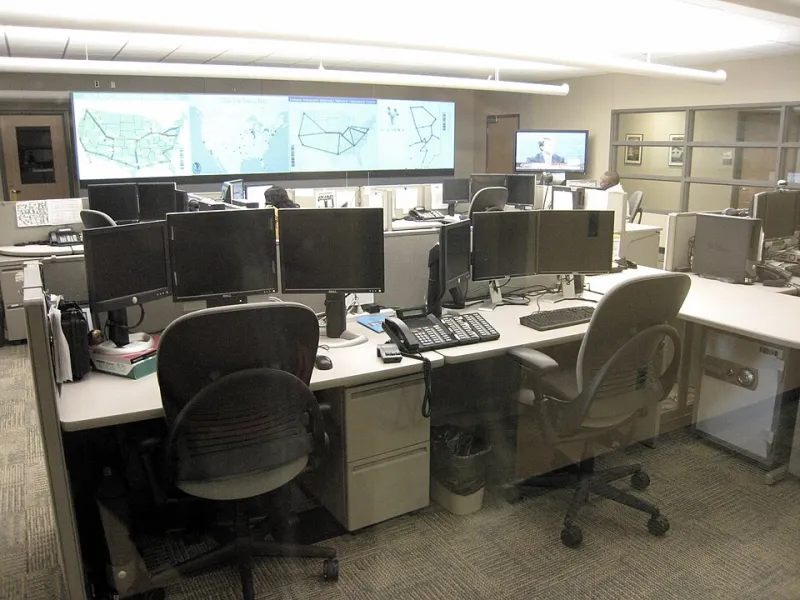
Photo: Alan Levine from United States, CC BY 2.0, via Wikimedia Commons
At 2:47 a.m. Eastern, a pager tears through the silence of a Denver apartment. Within ninety seconds, a site reliability engineer is staring at a latency graph for a payments API that just started climbing. By 3:05 a.m., the incident is mitigated, the customer impact is measured in fractions of a percent, and roughly four million sleeping Americans never know anything happened.
This is the invisible labor that underwrites the modern internet — and it is quietly becoming one of the most strategically important, and most fragile, parts of the American technology sector.
The Hidden Workforce Behind Every Seamless Morning
Every e-commerce checkout that clears, every payroll run that posts on time, every telehealth appointment that connects — all of it depends on a distributed network of overnight operations staff. Network operations centers in Dallas, Omaha, and suburban Virginia hum through the small hours, staffed by technicians monitoring dashboards for anomalies most consumers will never perceive.
The work is a study in controlled vigilance. Shifts follow strict handoff rituals: a written log of active incidents, a verbal walkthrough of experimental changes, a review of anything scheduled to deploy before sunrise. Veteran engineers describe the discipline as closer to air traffic control than traditional software development. Nothing moves without documentation, and boredom is treated as a resource to be protected — because alertness, not raw coding skill, is the job's scarcest commodity.
Tooling Has Improved. The Human Equation Hasn't.
The industry has poured money into automation over the past decade. Anomaly detection systems now flag irregularities before human eyes would catch them, runbooks execute semi-autonomously, and AI-assisted triage is beginning to filter out the noise that once buried junior technicians. Modern observability platforms mean today's on-call engineer diagnoses in minutes what took hours a generation ago.
Yet the fundamental economics remain stubbornly unchanged. On-call rotations compress into evenings and weekends. Compensation for overnight work rarely reflects its cognitive toll. And the psychological research is unambiguous: chronic circadian disruption carries measurable long-term health costs.
A growing number of engineers are drawing a line. Turnover among overnight NOC staff at major US providers has become a retention problem that shows up in board-level discussions, not just HR dashboards. Some firms are responding with structural fixes — four-day rotation cycles, mandatory recovery days after overnight incidents, and premium pay tiers for graveyard shifts. Others are simply outsourcing the problem, pushing overnight coverage to contractors with less institutional knowledge and higher churn.
Why This Matters More in 2025
The stakes are rising. As AI workloads reshape data center architecture and regulatory scrutiny of uptime intensifies — particularly in finance and healthcare — the tolerance for extended outages is shrinking. When a major cloud region stumbles, the fallout now reaches congressional hearings and mainstream news cycles within hours.
The uncomfortable truth for technology leadership is that reliability has a human floor. Automation can absorb routine failures, but novel incidents at 3 a.m. still require a rested, experienced person at the keyboard. Companies that treat overnight operations as a cost center to be minimized are, in effect, betting their uptime on the cheapest available labor during the hours when mistakes are most expensive.
The engineers keeping America's systems alive overnight won't trend on social media or keynote a conference. But every morning that your applications simply work is, in a very real sense, their shift report. Recognizing that — with better pay, saner rotations, and genuine career paths for operations talent — may be the most underrated reliability investment a company can make this year.