Less Machine, More Computing: The Quiet Rebellion of Retro Computing in 2025
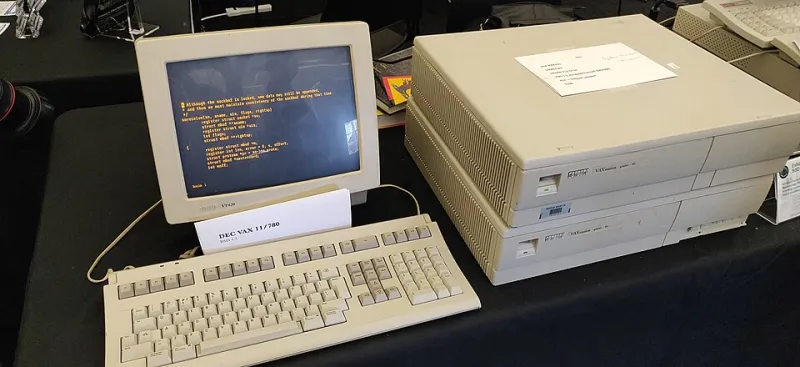
Photo: leighklotz, CC BY 2.0, via Wikimedia Commons
Walk the floor of any mid-size tech gathering in Austin, Portland, or Durham this year and you'll notice something odd: mechanical keyboards with the clicky buckling springs of 1980s terminals, laptops running window managers that would look at home on a Unix workstation from 1986, and developers enthusiastically explaining why a machine with a fraction of the computing power of a modern smart thermostat changed how they think about their work.
Retro computing is no longer a niche hobby for collectors restoring Commodores in basements. In 2025, it has hardened into a genuine movement with commercial energy behind it — new hardware that emulates vintage form factors, operating systems built deliberately on forty-year-old design principles, and a growing cohort of professionals who argue that the past holds lessons the industry has been busy forgetting.
The Nostalgia Economy Gets Serious
The market has responded to the appetite. Restored vintage terminal keyboards routinely sell for more than their original price adjusted for inflation. Small American outfits now manufacture modern boards that replicate the feel and sound of decades-old hardware, and they cannot keep up with demand. Meanwhile, a wave of 'retro-inspired' software projects — minimalist operating systems, single-purpose applications, text-based interfaces — has attracted both hobbyist contributors and real funding.
It would be easy to dismiss all of this as nostalgia, and certainly some of it is. There is real comfort in the weight and permanence of machines that were built to be repaired rather than replaced. But talking to the people driving the movement reveals something more substantive underneath.
The 'Less Is More' Backlash
The core grievance is familiar by now: modern software has become heavy. Applications that once required kilobytes now expect gigabytes. Operating systems ship with telemetry, assistant overlays, subscription prompts, and advertising surfaces that users never asked for. A basic text editor in 2025 can consume more memory than an entire desktop environment did a generation ago.
Retro computing offers a visceral counterexample. On a vintage machine or a modern minimalist system, every megabyte is accounted for. Software does one thing, does it legibly, and gets out of the way. There is no update nagging you at startup, no dark pattern nudging you toward a subscription, no background process quietly syncing your behavior to a cloud service.
For a subset of developers and writers, working in that environment is not deprivation — it is relief. Focus, they report, comes more easily when the machine offers fewer doors to walk through.
What Mainstream Tech Can Actually Learn
Stripping away the sentimentality, the retro movement makes a few arguments that deserve a fair hearing from the industry at large.
Longevity is a design goal worth reviving. Machines from the 1980s still boot and run productively. Most modern consumer devices are effectively obsolete within a decade, a pattern with mounting environmental and economic costs. Designing for repairability and long software support — as right-to-repair advocates have pushed for years — is not nostalgia; it is stewardship.
Simplicity scales better than features. The enduring appeal of tools like plain-text formats, command-line utilities, and single-purpose applications suggests that users value predictability over capability. Every feature has a maintenance cost and a cognitive cost, and the industry has been spending both freely for two decades.
Ownership still matters. Vintage computing communities prize machines that work without an account, a license server, or a company's continued goodwill. As subscription fatigue grows among American consumers, that independence is increasingly a selling point rather than a relic.
Not a Rejection — A Correction
To be clear, few in the retro computing movement genuinely want to trade away modern connectivity, security, or accessibility. The point is not to return to 1985; it is to recover the design discipline that era demanded and modern abundance let slip. Constraints made engineers thoughtful. Scarcity made interfaces honest.
Whether the mainstream absorbs those lessons or simply sells them back as aesthetics — retro-themed apps with the same bloated internals — remains to be seen. But the movement's growth says something important about the current moment. After two decades of more: more features, more notifications, more everything, a meaningful slice of the tech community is asking a question the industry should take seriously.
What if the best way forward is, in some respects, back?