Power Before Pixels: Why AI's Data Center Boom Is Now a Grid Problem
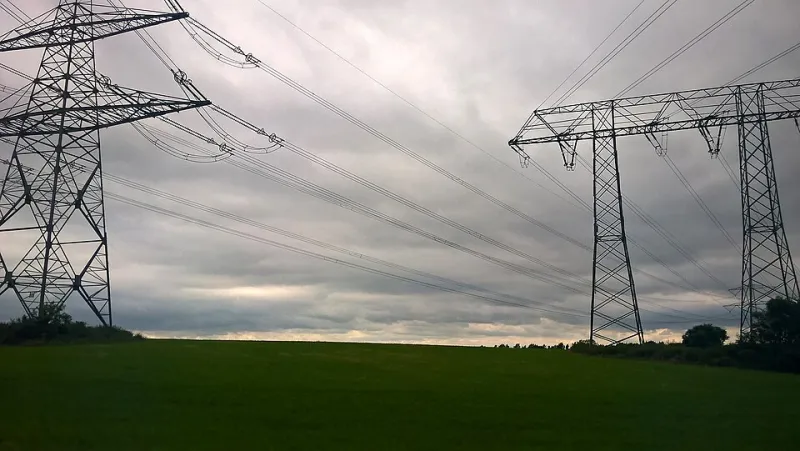
Photo: Lupus in Saxonia, CC BY-SA 4.0, via Wikimedia Commons
For the past two years, the AI conversation has been dominated by processors, memory, and model size. In 2026, the binding constraint is more physical. Data centers need power, and the US electric grid was not planned for the load profile that AI is creating. The result is a new geography of compute, shaped less by fiber routes and tax incentives than by interconnection queues, transmission capacity, and the willingness of state regulators to approve large-load contracts.
The demand curve meets the interconnection queue
AI data centers are not ordinary commercial buildings. A single campus can draw hundreds of megawatts, and the load arrives in steps as servers are installed. Utilities must plan for generation, transmission, and substation capacity years in advance. In many regions, the interconnection queue is already measured in years, not months. A developer can finance a building faster than the grid can serve it.
That mismatch is changing site selection. Regions with available capacity and faster interconnection processes are attracting projects. Regions with constrained transmission are seeing delays, higher costs, or outright cancellations. The old logic of building near customers or fiber is still relevant, but power availability now sits at the top of the checklist.
Who pays for the upgrade
The cost of grid upgrades is the central policy question. Utilities and regulators are negotiating large-load tariffs that attempt to assign the cost of new transmission, substations, and generation to the customers who cause them. Consumer advocates worry that ordinary ratepayers will absorb costs if large-load contracts are poorly structured. Developers worry that tariffs will be so high or so inflexible that projects become uneconomic.
The debate is playing out in state commission dockets across the country. Some utilities are proposing minimum-take contracts, exit fees, and take-or-pay arrangements. Others are experimenting with flexible load programs that ask data centers to reduce consumption during peak periods. The details matter because cloud providers ultimately pass infrastructure costs to enterprise customers.
Local opposition is now part of the critical path
Land use has become another constraint. Counties and municipalities are scrutinizing water use, noise, tax abatements, and the visual impact of large campuses. Opposition is no longer limited to environmental groups. Local residents who worry about rising electricity bills and strained infrastructure are showing up at public hearings.
For developers, community engagement has moved from public relations to project risk. A site that looks attractive on paper can stall if the local government withholds permits or if the utility cannot secure approval for a needed substation. The result is a longer, more expensive development cycle.
Site selection in 2026
Power-first site selection is now standard practice. Developers are looking for existing interconnection capacity, brownfield sites with retired generation, and locations where utilities have excess headroom. Behind-the-meter generation, fuel cells, batteries, and long-term nuclear power agreements are part of the mix. Some projects are pairing data centers with on-site generation to reduce dependence on the grid, even if the economics are less favorable than grid power.
Texas remains attractive because of its faster interconnection process and competitive electricity market, but its grid is not immune to tight supply. Virginia's data center corridor is constrained by transmission limits. Georgia, Arizona, and parts of the Midwest are seeing growing interest, but each has its own regulatory and infrastructure challenges. The common thread is that power availability, not land price, is driving decisions.
What it means for enterprise cloud costs
Enterprises may not build data centers, but they will feel the consequences. Cloud providers are signing long-term power purchase agreements, investing in generation, and adjusting regional pricing. Energy surcharges, capacity commitments, and longer reservation terms are likely to become more common. In some regions, the cost of power may matter more than the cost of real estate.
Procurement teams should ask cloud providers about energy sourcing, regional constraints, and how power costs are passed through. Architecture teams should consider whether workloads can move between regions or be scheduled for times when power is cheaper. The assumption that compute capacity will always be available in the same regions, at predictable prices, is no longer safe.
The policy gap
Grid upgrades take years. AI product cycles take months. That mismatch is difficult to resolve through market forces alone. Regulators need to approve new transmission and generation, but they also need to ensure that costs are allocated fairly. Utilities need to plan for large loads without overbuilding. Developers need certainty without shifting all risk to ratepayers.
The grid is the new cloud because compute is now tied to physical infrastructure in a way that the software industry has not experienced for decades. The organizations that plan for power constraints will have an advantage. The ones that assume the electrons will appear on schedule may find themselves waiting.